
If you’ve only had grilled Korean barbecue like samgyeopsal or galbi, you’re missing a whole other world of Korean pork cuisine.
Bossam, the lesser-known sibling, skips the sizzling grill. Instead, it’s pork belly gently boiled until it turns buttery soft—clean, rich, comforting. Wrapped in cabbage, paired with kimchi, garlic, salted shrimp, and ssamjang, this dish brings you straight to a Korean family table in the middle of winter.
For those unfamiliar with Korean cuisine, bossam is a comforting classic enjoyed especially during late autumn when families gather to make kimchi in a tradition called “gimjang.”
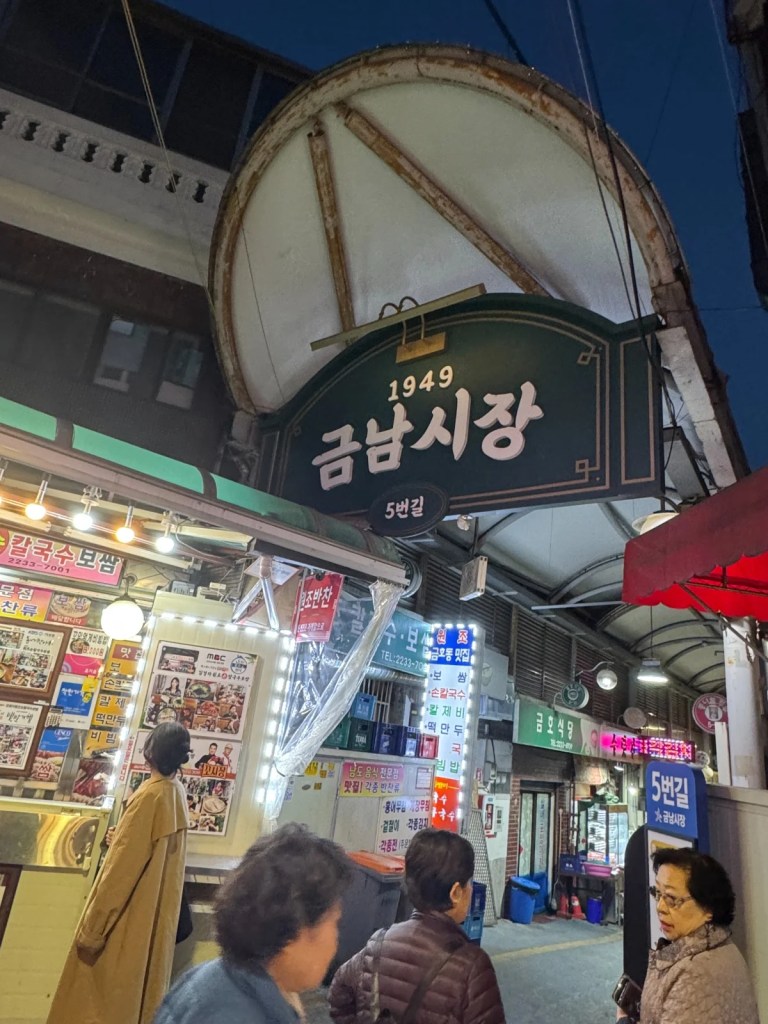
We found one of the most unforgettable versions of bossam in the heart of Seoul’s Geumnam Market—at a place that feels more like someone’s kitchen than a restaurant: Kim Gyeong-ja Original Kalguksu Bossam.


🛍️ Geumnam Market — A Small But Soulful Spot in the City
Geumnam Market isn’t a huge tourist destination. It’s a cozy, working-class traditional market, nestled between Itaewon, Seongsu, Myeongdong, and Hannam. It’s where locals still do their daily shopping.
You’ll find old-school fruit vendors, aunties selling fresh herbs, butchers, fishmongers, and tiny restaurants that have probably looked the same since the ’90s. That’s what makes it beautiful. It’s not curated—it’s lived in.
We wandered into the market one chilly evening, led by the steam rising from alleyways and the smell of boiling broth. A hand-painted sign caught our eye: “김경자 원조 칼국수 보쌍집”. And just like that, we stepped inside.


🍽️ What We Ordered: Bibimbap, Bossam, and a Whole Lot of Warmth
🥬 The Bibimbap — Fresh, Fragrant, and Full of Heart
Their bibimbap came in a humble metal bowl, but it might’ve been the most soulful version I’ve had in Seoul. Shiny lettuce leaves, seasoned namul (veggies), a perfectly fried egg with a gooey yolk, and the unmistakable aroma of sesame oil and crushed sesame seeds. The gochujang (Korean chili paste) came on the side—so we could make it as mild or as fiery as we liked.
It was fresh. Nutty. Light but satisfying. This wasn’t a bibimbap designed for Instagram. It was the kind your aunt would make after a long walk home.
🐷 The Bossam — Melting Pork and a Symphony of Sides
Then came the bossam.
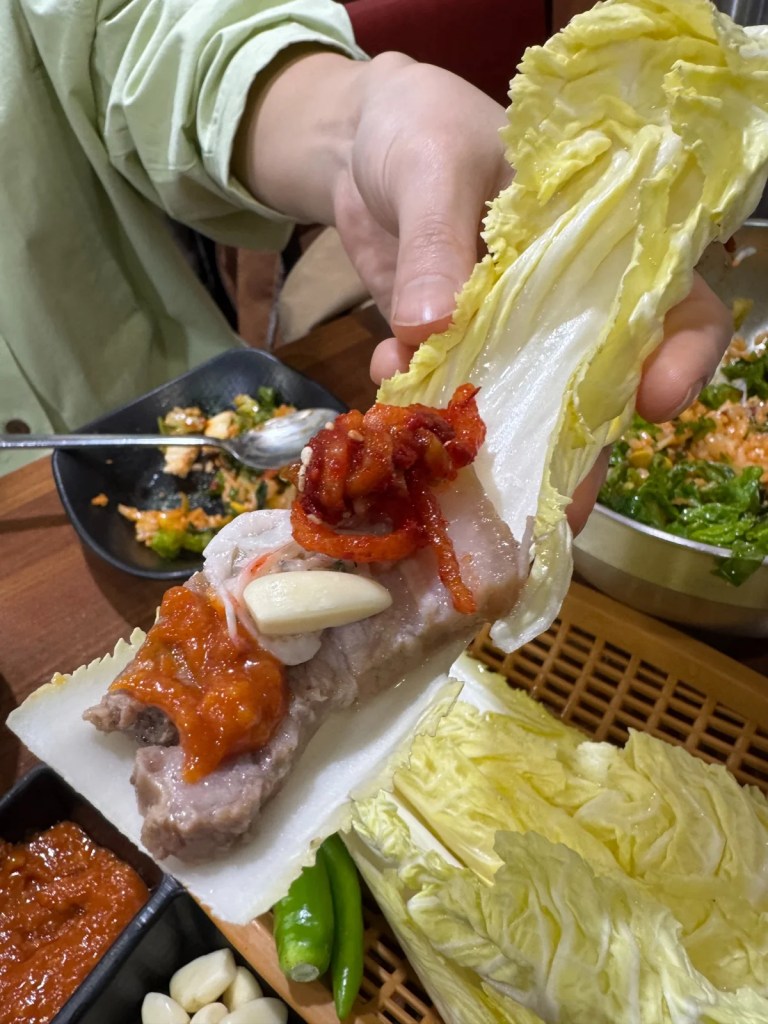
The slices of pork belly were thick but unbelievably soft—not greasy, just rich and tender. You see a perfect layer of fat, and yet it didn’t feel heavy at all. It practically melted when wrapped in a cool cabbage leaf.
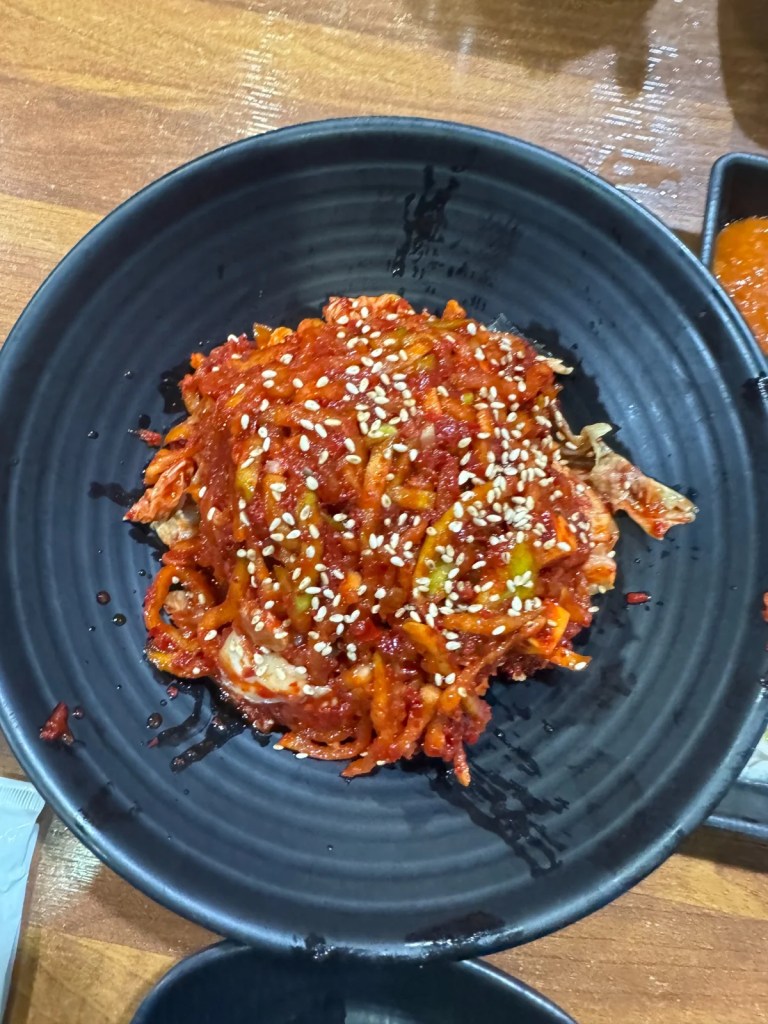
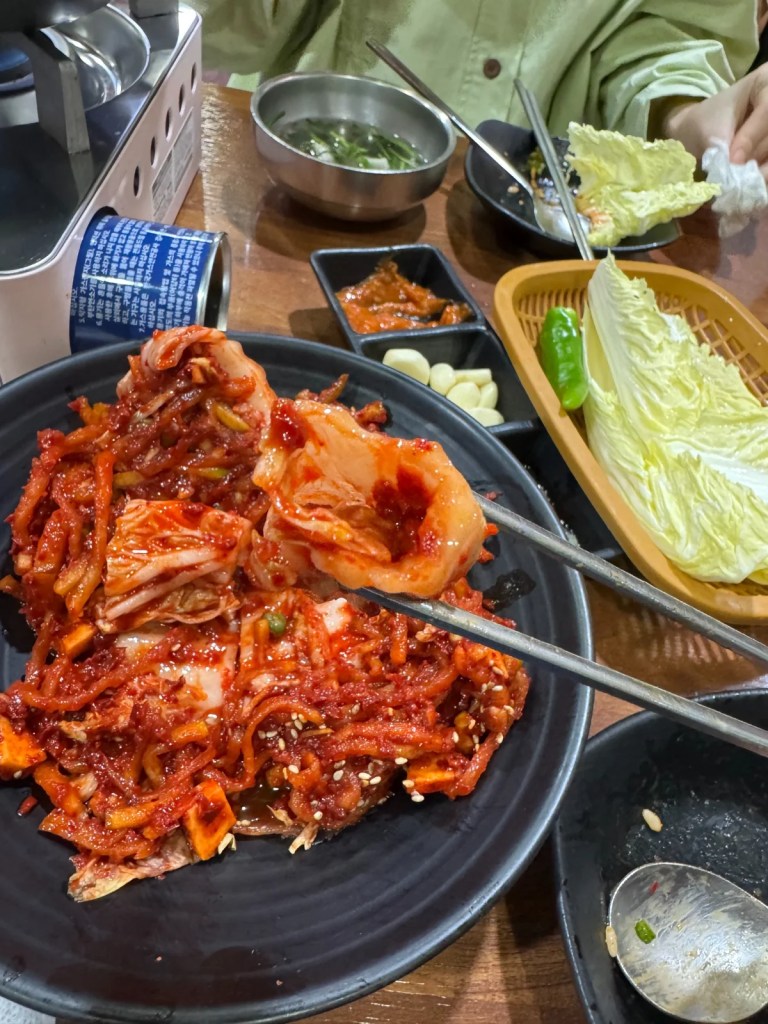
We layered ours with garlic, ssamjang, and their incredible house kimchi—which, by the way, had raw oysters, sweet potatoes, and that just-made bite of fresh kimchi spice.
Each bite was warm, sharp, creamy, and crisp all at once. A full sensory experience—and all for the price of a coffee in some parts of Seoul.




🍜 Don’t Miss: Anchovy Broth That Heals the Soul
And just when we thought the meal was done,
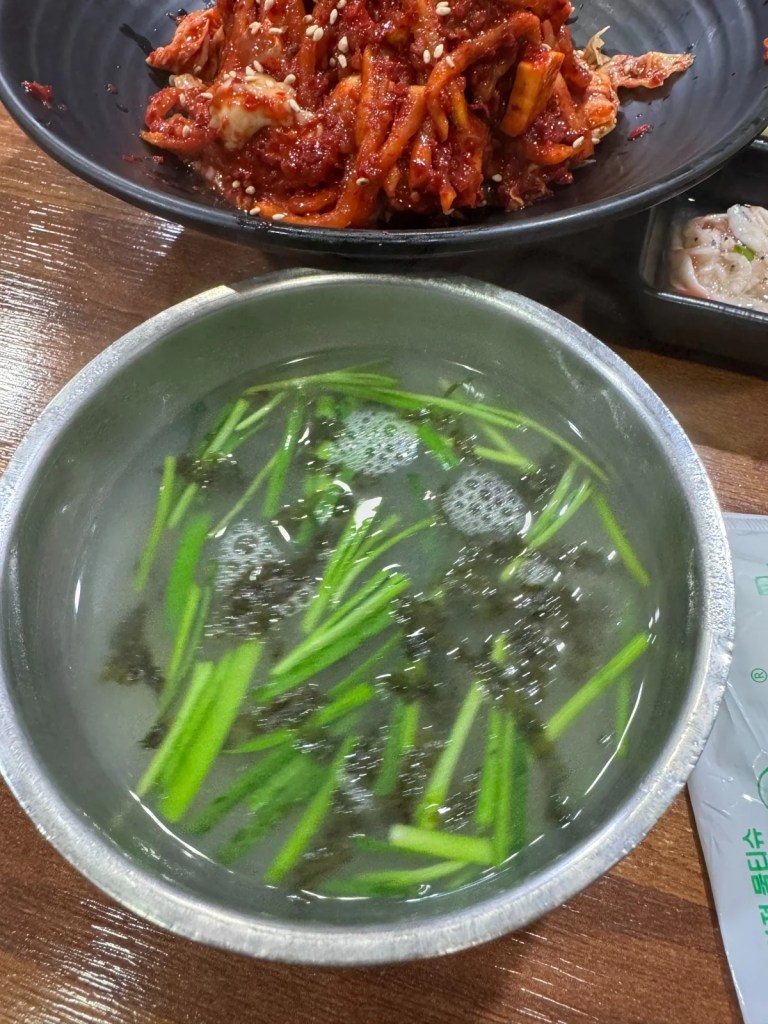
they brought over a small bowl of kalguksu broth.
We didn’t even order it. It just… came.
It was made with dried anchovies — light, clear, full of umami.
The perfect cleanser after fatty pork and strong seasonings.
It was like the meal said, “Here, take a deep breath now.”
👵 More Than Just a Meal: A Slice of Korean Tradition
Bossam is deeply tied to Korea’s “gimjang” (winter kimchi-making) tradition. Families gather and eat bossam with freshly made kimchi. It’s a food with cultural and emotional roots. This restaurant brings that warmth to the table.
💸 Budget-Friendly, Flavor-Full
Bibimbap and kalguksu here are only 5,000 KRW each—which is nearly half the price of what you’d normally pay in most Seoul restaurants, where similar dishes typically go for 10,000 to 12,000 KRW.
As for the bossam, it’s 40,000 KRW, which might sound standard, but the difference lies in the generosity. The pork part is more than enough for two, and the kimchi—especially the house-made variety with oysters and sweet potatoes—is piled high and full of flavor. It’s not just filling. It feels like someone cared about what they served you.
This place doesn’t feel like it’s trying to impress. It just serves food that’s quietly, confidently excellent—at prices that leave you smiling.
📍 Location & Tips
📌 Location: Geumnam Market, Jung-gu, Seoul
🔗 Google Maps: Kim Gyeong-ja Original Kalguksu Bossam
🚉 Nearest stations: Oksu Station or Hannam Station (about 10-minute walk)
🕒 Opening hours: 11 AM – 9 PM (double check for break times!)
💰 Budget: 5,000 – 40,000 KRW (super affordable and very filling!)
🍶 Bonus Tips
- Side dishes are delicious and free
- Alcohol is available (try makgeolli!)
- Expect a short wait during peak lunch or dinner hours
- Prices are amazing — Bibimbap and kalguksu are just 5,000 KRW each (compared to the usual 12,000 KRW in Seoul!)
- Bossam is 40,000 KRW, which is typical, but the portion size and especially the kimchi quantity are way more generous than average
- Bring cash, as some market vendors may not accept cards
- Portions are big, so it’s best to go with a friend and share
- If you’re going solo, you may be seated with other guests—a common local practice!
✨ Final Thoughts
We came for bossam. We left with warm bellies, wide smiles, and the feeling that we’d found a real piece of Seoul. This wasn’t just food—it was a story, wrapped in cabbage, seasoned with time.
Have you tried bossam before? Or visited a traditional market in Korea?
Share your experience in the comments below — we’d love to hear your story!
 Hey Hankuk
댓글 남기기