
Want to Know Korea Better?
Where should you go to truly understand Korea? Shopping malls? K-pop hotspots? Those are great. If you want to see Korea’s past and present, visit the National Museum of Korea (NMK). It is the place to be.
Even better? It’s completely free! Located near Itaewon, Yongsan, and Hannam-dong, it’s easy to stop by while exploring Seoul. Step inside and come face-to-face with thousands of years of history. The museum isn’t just a collection of artifacts—it’s a journey through time, showcasing the legacy and stories of Korea’s ancestors.
The National Museum of Korea is as impressive as New York’s Metropolitan Museum of Art. It is comparable to Paris’ Louvre Museum. Best of all, you don’t have to pay a single cent to visit.


5 Years Later, the National Museum of Korea Feels Like a Whole New World
It had been five years since my last visit to the National Museum of Korea. I could hardly believe the transformation. Compared to before, it felt like stepping into an entirely different world. In the past, artifacts were densely displayed, making it difficult to focus on individual pieces. However, the renewed museum now allows each artifact to shine in its own space. Each tells its own story. It is almost like admiring masterpieces in an art gallery.
One of the most striking changes was the lighting. The exhibition halls were dimly lit, with spotlights highlighting each artifact. This created a dramatic effect, making the relics come to life. It felt as if I was being transported into the era in which they were originally created.

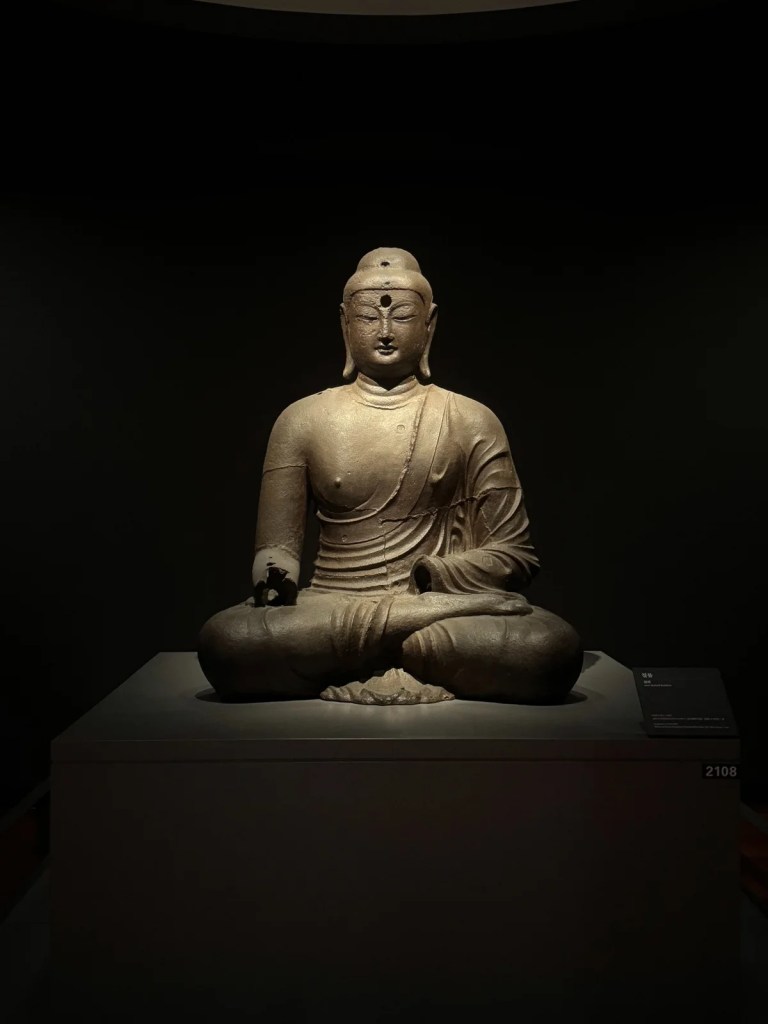
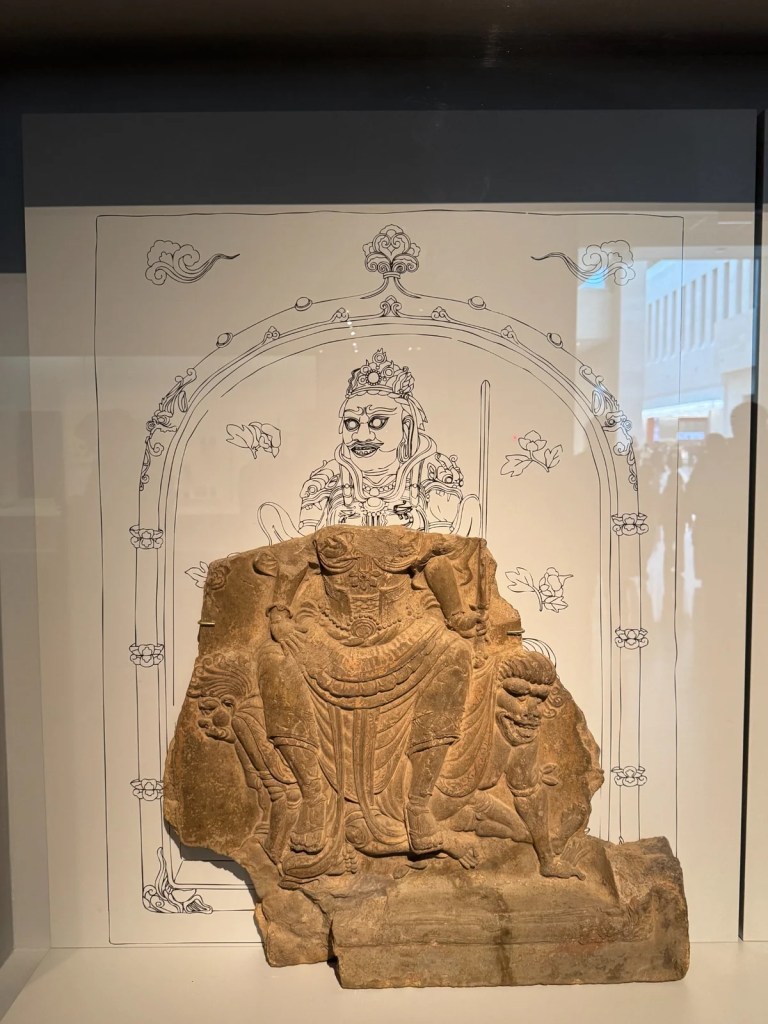
A Journey Through Time: Immersive Media Art & Sensory Exhibits
From the moment I stepped into the Prehistory and Ancient History Hall, I was captivated. A towering media obelisk stood at the entrance. It visually narrated the discovery of fire. It also showed the daily life of prehistoric Koreans. This made the experience feel grand and immersive. Thanks to these audiovisual elements, the museum was no longer just a place to observe history. It became a place to experience it firsthand.
Another highlight was the interactive exhibits. Visitors could touch replicas of Korea’s most famous artifacts. These included the Gilt-bronze Incense Burner of Baekje and the Seokguram Grotto relief. Being able to physically feel these historical treasures made the experience engaging not only for children but also for adults.

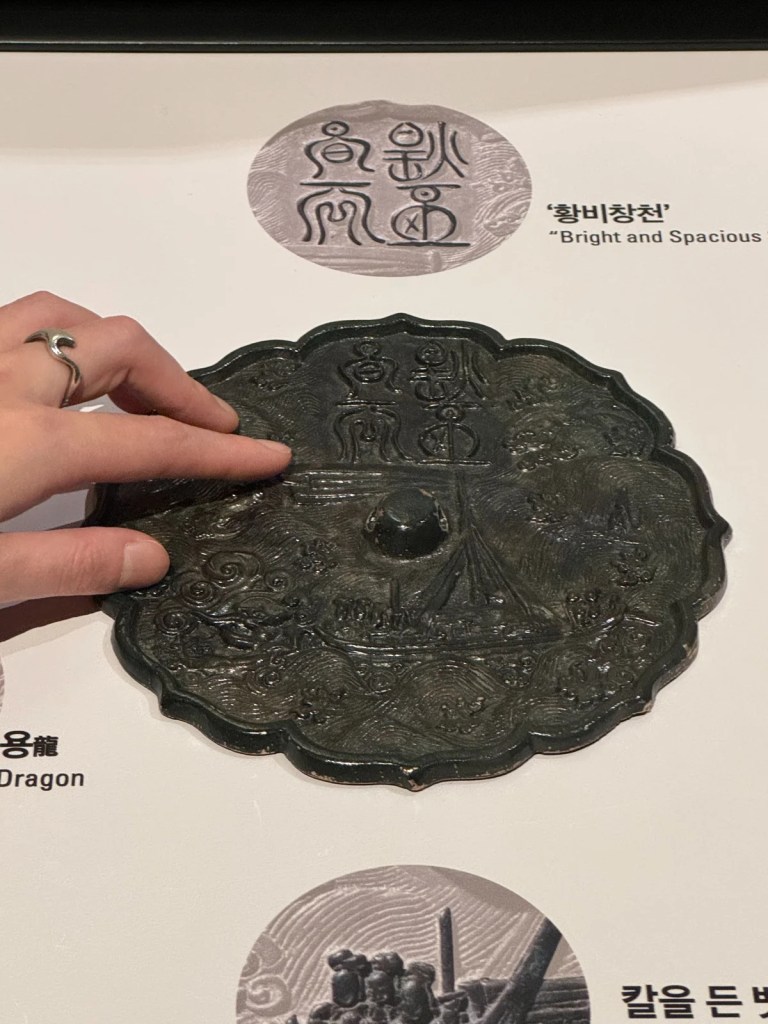
BLACKPINK Jennie’s ‘ZEN’ and the Silla Dynasty’s Wonhwa
Have you seen BLACKPINK Jennie’s music video ‘ZEN’?
If you have, you might have noticed her outfit took inspiration from Silla Dynasty’s ‘Wonhwa’. It was also inspired by the golden crowns worn by Silla royalty. The Wonhwa were powerful female leaders of Silla, symbolizing both beauty and authority. Knowing this historical background makes Jennie’s stylistic choices in ‘ZEN’ even more meaningful.
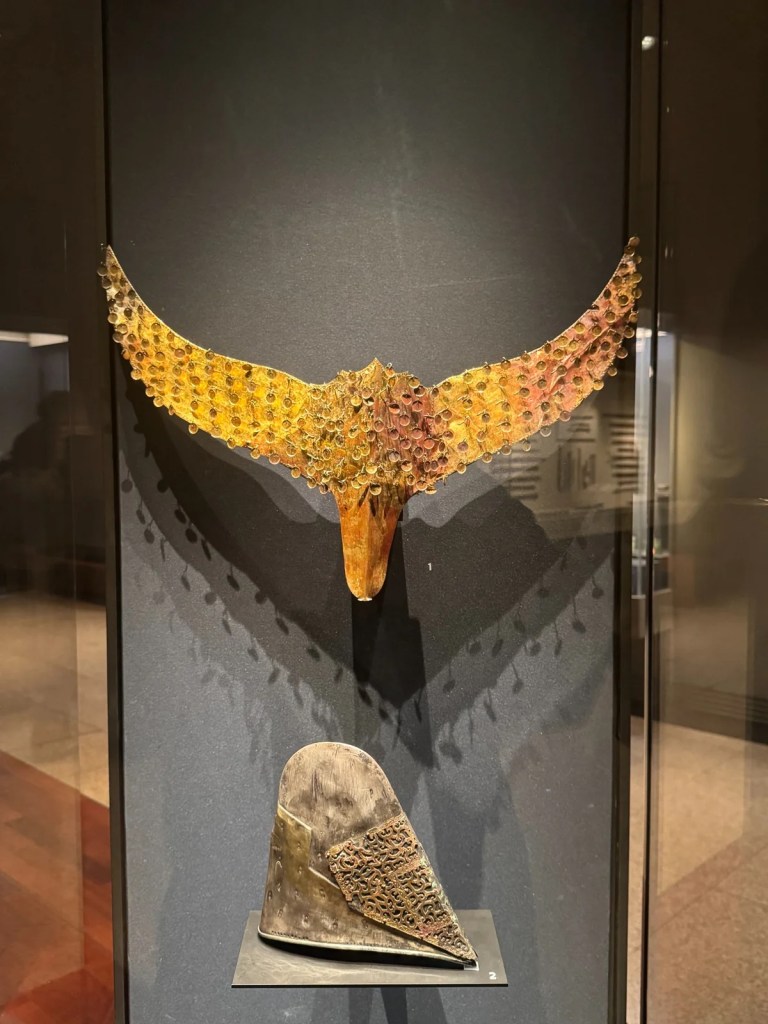

At the National Museum of Korea, you can see these ancient Silla crowns in person. It’s fascinating to think that such intricate designs existed thousands of years ago.
Even Jennie’s hairstyle in ‘ZEN’ took inspiration from Korea’s past. Her elaborate updo resembles the “Eoyeo-meori” style worn by noblewomen during the Joseon Dynasty. It’s amazing to see how traditional Korean aesthetics continue to influence modern fashion and music.
The Most Moving Moment: Son Kee-chung’s Corinthian Helmet
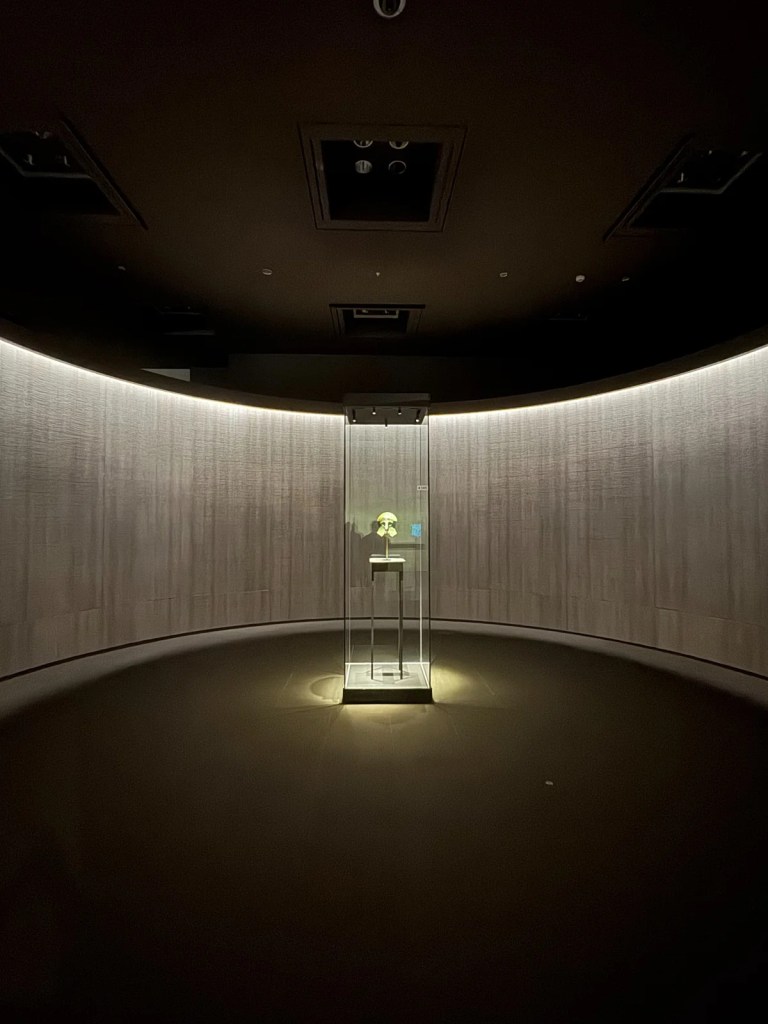
One exhibit that truly struck a chord with me was Son Kee-chung’s Corinthian-style bronze helmet, displayed in the donation hall.
Five years ago, it was tucked away in a quiet corner. But this time, it stood proudly at the center of a grand exhibition space, illuminated with a sense of reverence.
This helmet, crafted in 6th-century BC Corinth (Greece), is the only perfectly preserved artifact of its kind. It was initially intended to go to Son Kee-chung. He was the Korean marathoner who won gold at the 1936 Berlin Olympics. However, due to Olympic regulations prohibiting non-medal prizes, the helmet was never given to him.

At that time, Korea was under Japanese occupation, and Son was forced to compete under the Japanese flag. Even as he stood on the podium, he had to bow under the rising sun flag instead of his own. Though he had won, he couldn’t truly celebrate his victory—a painful reminder of Korea’s history.
Years later, Son Kee-chung discovered that the helmet had remained in Berlin. He worked tirelessly for its return. In 1986, on the 50th anniversary of the Berlin Olympics, Germany officially presented it to him. In 1994, Son donated the helmet to the National Museum of Korea. He declared, “This belongs not to me, but to the Korean people.”
This relic is not just a piece of Western history. It is a symbol of Korea’s resilience. This makes it one of the most meaningful treasures in the museum.


Unbelievable—All of This Is Free?!
With such world-class exhibitions, you’d expect an admission fee—but the National Museum of Korea is completely free.
There’s also a well-curated gift shop. It offers unique souvenirs inspired by Korean artifacts. These include mini replicas of the Baekje Incense Burner and the Seokguram Buddha.
This visit reminded me once again how rich and valuable Korea’s history truly is. If you’re visiting Seoul, I highly recommend adding the National Museum of Korea to your itinerary. It’s an experience you won’t want to miss.


📌 National Museum of Korea – Visitor Information
📍 Location: 137 Seobinggo-ro, Yongsan-gu, Seoul
🕒 Hours:
- Monday, Tuesday, Thursday, Friday, Sunday: 10:00 AM – 6:00 PM (Last admission: 5:30 PM)
- Wednesday, Saturday: 10:00 AM – 9:00 PM (Last admission: 8:30 PM)
💰 Admission: FREE!
🌍 Multilingual Pamphlets: Available in English, Chinese, Japanese, and more
🔗 Official Website: National Museum of Korea
📍 Google Maps: View on Google Maps
Final Thoughts
If you’re visiting Seoul and looking for a free, world-class museum, the National Museum of Korea is the perfect place. It offers breathtaking exhibitions, interactive experiences, and a deep dive into Korea’s rich history—all for free.
So, why not take a break from shopping and K-pop attractions and explore the real soul of Korea? You won’t regret it.

 Hey Hankuk
댓글 남기기